The Artist Shadowing Program 2026 brought two international artists to Finland’s Tampere region: “There’s space given to explore”
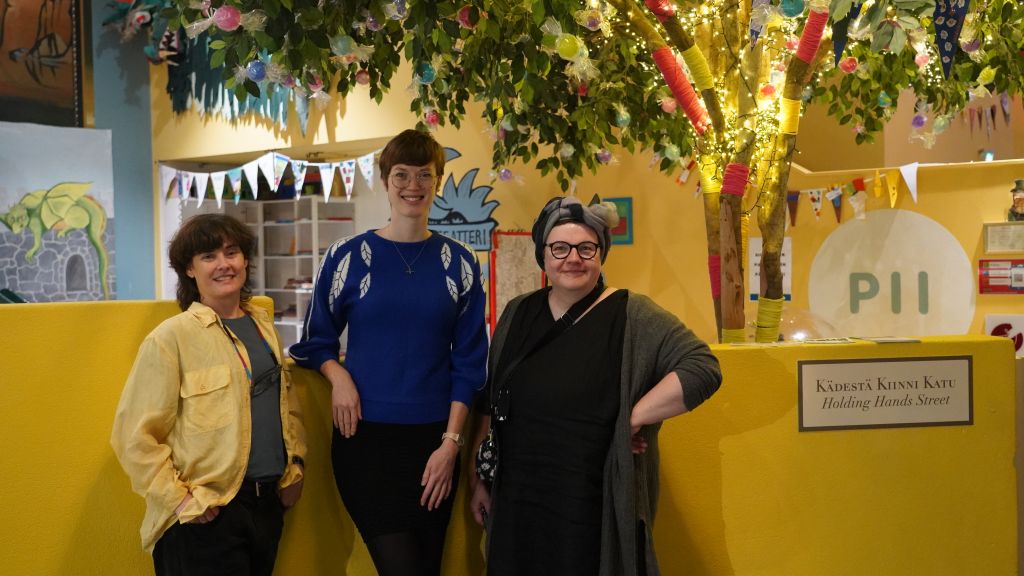
What happens when artists who are used to creating experiences for others get the chance to step back and learn themselves? Visual artist Rachel Rothwell and community artist and choreographer Anna Lord travelled to Finland to explore arts and health practices from a new perspective. There, they discovered the value of having space to observe, participate and exchange ideas.
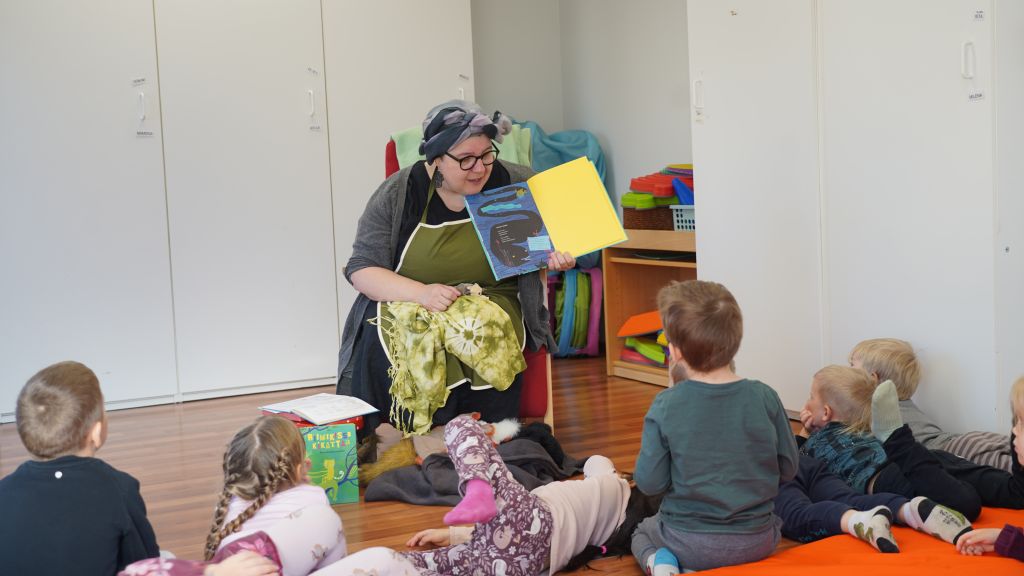
It’s a bright and sunny morning at Arwola Day Care in Lempäälä, Finland, where Piia Kleimola, playing the role of a granny, is hosting a nursery rhyme session for children.
The door opens. A small group of ten children shyly step into the room and take their places on the mattresses laid on the floor. Everyone is quiet. The children are a little hesitant. But then Granny starts chattering away, engaging the children and pulling them with her into an interactive adventure in the magical world of rhymes.
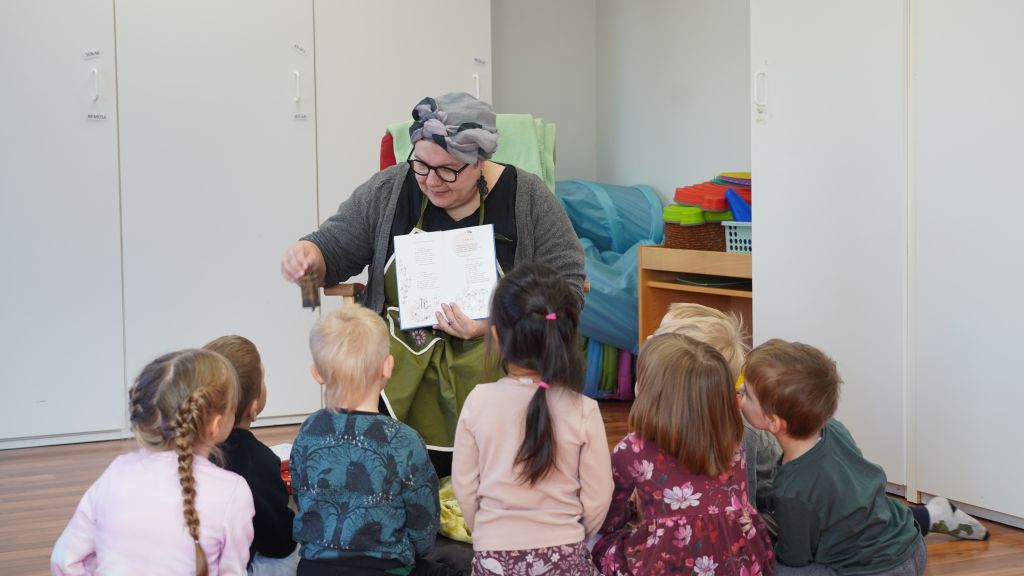
She has their undivided attention. The children and adults, as well as our two non-Finnish-speaking Shadowing artists, listen, laugh and play along with the rhymes. In less than five minutes, the room is full of joy, participation and togetherness. Such is the power of art.
Opportunity to slow down
For the people who create these moments for others, however, there is rarely much time to stop and simply receive.
“Like many creatives, most of my day gets taken up with things that need immediate attention, like planning workshops, looking for funding, paying bills and so on,” says Irish visual artist Rachel Rothwell.
The sentiment is echoed by her fellow international artist in this year’s Artist Shadowing Program, community artist and choreographer Anna Lord from Sweden.
“I was telling Rachel before the program started that I was nervous of what they were expecting from us. I thought we would have to show things. I didn’t expect to come to a dance class and not be asked to take the lead myself. They don’t expect anything.”
“It’s a knee-jerk reaction. Wait, am I really allowed to just come here and see how you work, chat to you, get your point of view, and that’s all you want from me?” Rothwell confirms.
The pair have just spent the last few days of September in Finland’s Tampere region, hosted by Cultural Centre PiiPoo for the 2026 Artist Shadowing Program. Organised by Turku University of Applied Sciences, the program is part of the CultureAndHealth Platform and co-funded by the European Union. It gives artists an opportunity to step outside their usual working environment, slow down and learn through observing and participating in the work of local organisations and professionals at the intersection of culture and health.
Jumping at the chance
For both Rothwell and Lord, the intersection of culture and health was already familiar territory. Lord had combined her work as a choreographer and community artist with a degree in physical therapy to support her work with dance and movement in geriatric hospitals, elderly dwellings and day nurseries for children. Rothwell had similarly explored the impact of participatory arts in hospitals, assisted living facilities and community centres. The opportunity to see how these connections are made in Finland offered a natural next step for both artists.
“I’d been following the CultureAndHealth Platform for a while and attended a few of the online roundtables organised by them. Those really brought home how many interesting projects are going on in other countries around Europe. So, once I saw the open call for the program, I jumped at the chance,” Rothwell recalls.
Lord has wanted to combine arts and healthcare for years. That was her whole purpose in studying physical therapy. She describes a lucky coincidence that led to her applying for the program.
“I had just subscribed to some newsletter when I saw the open call. I somehow understood that the artists had to have two years of experience working in healthcare. I had just completed that. Later I realised it doesn’t say anywhere that you must work in healthcare yourself. But at first, I thought I had just happened to meet the requirement, and that made me really want to apply,” Lord explains.
Being on the receiving end
The Finnish approach to learning impressed both Rothwell and Lord.
“There’s space given to explore. Activities are structured, but not in the sense that here is the paintbrush, now paint the circle,” Rothwell notes.
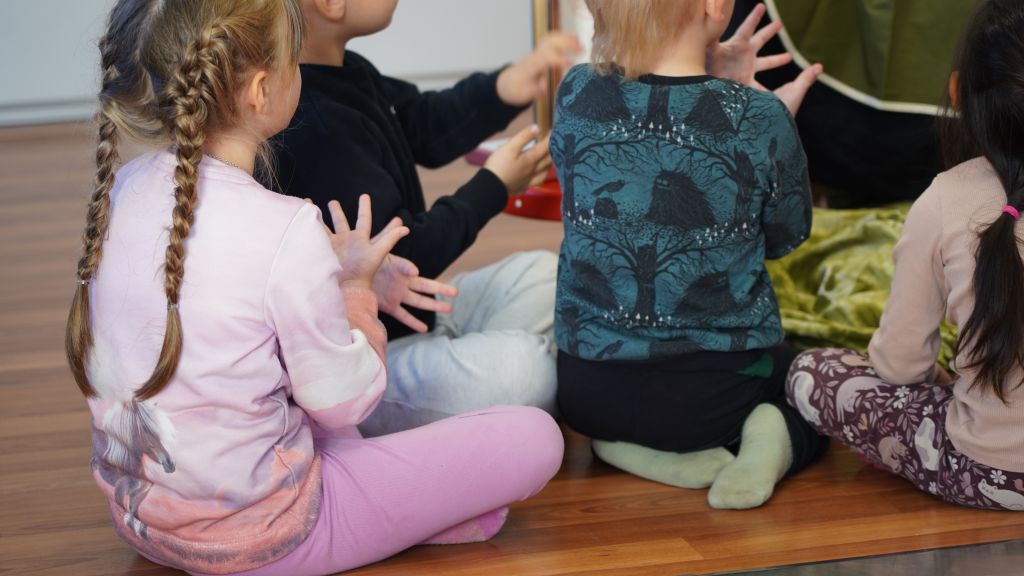
She is referring to the approach the teachers use in the workshops, but it applies to the artists’ experience too. Simply sitting and observing meant that Rothwell and Lord were able to pay attention to little things and see things differently than they usually would.
Both noticed small, quiet moments that might easily go unnoticed in the rush of everyday work. They admired the way adults interact with children, found art in the middle of a shopping mall, reflected on the sense of trust created in the workshops and, perhaps most importantly, experienced what it was like to be students themselves again.
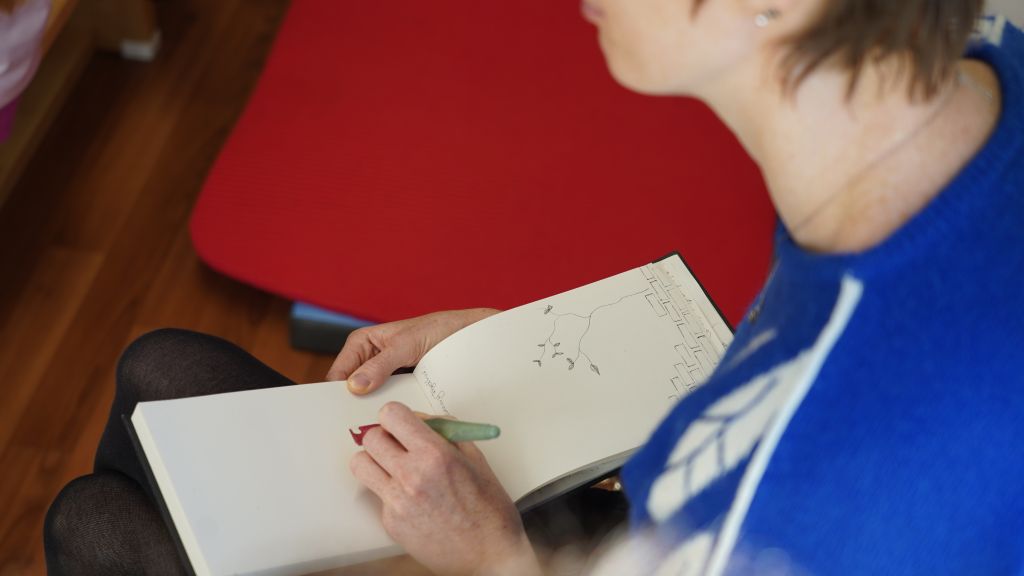
“It was fun to be a student and not so self-absorbed. I mean, not constantly reflecting on my own actions and be stressed out when a bit of chaos appears. I could just look at other people, see what they’re doing, take it in and be inspired,” Lord says.
Lord got a lot out of the program on a personal level too. She had thought that injuries meant she could no longer challenge her body in the same way, but during one particularly inspiring children’s circus class, she found herself doing somersaults and cartwheels.
Evolving practice
Lord reflects on the importance of being able to look at things from different perspectives.
“For example, seeing how they interact with the kids here. In my own work, if I see children starting to run around, I’m thinking, is it a good thing or is it too chaotic? But when I’m sitting here and looking at the teachers, I see them providing valuable playtime,” Lord says.
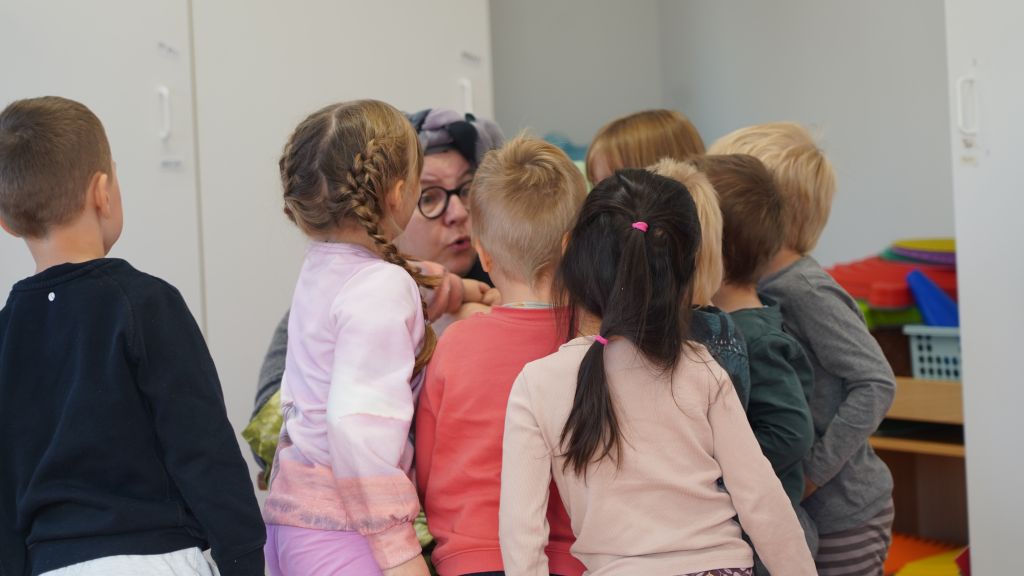
There’s quite a bit of freedom and trust in the workshops in Rothwell’s view. She describes the teachers explaining to the children how things work and what to do and then letting them use even a glue gun – with heat-protective gloves on, of course.
“I like that idea. It’s more about seeing what they can do than thinking that, okay, they’re this age, they can do A, B, C. It supports curiosity and independent learning. And there is still guidance available as you need it. That’s my one big takeaway,” Rothwell shares.
Learning reciprocated
Being able to welcome the artists into their daily activities was a valuable opportunity for Cultural Centre PiiPoo. For director Piia Kleimola, opening their work to outside perspectives is also a way of learning.
“It’s not enough to merely showcase the activities. You need to open your work and let the artists participate in the daily life of the organisation. When you do that, you also get to reflect on what and how you do things yourself.”
For PiiPoo, this participation can mean hands-on activities, experimenting, observing or simply sharing a moment together.
“I hope both Anna and Rachel return home with a lot of joy, inspiration and concrete ideas to take back into their own practice. It’s also essential for us that they felt welcome to share this experience with us.”
Coming together
During the morning Finnish nursery rhyme session, Rothwell and Lord sit at the back of the room, observing an activity conducted in a language unfamiliar to them. As the children laugh at funny words and rhymes, so do Rothwell and Lord. As the children jump and play along, so do the artists. The joy is contagious.
“I’m grateful just to be able to have a few days to exchange and absorb, and to everyone we’ve encountered,” Rothwell says.
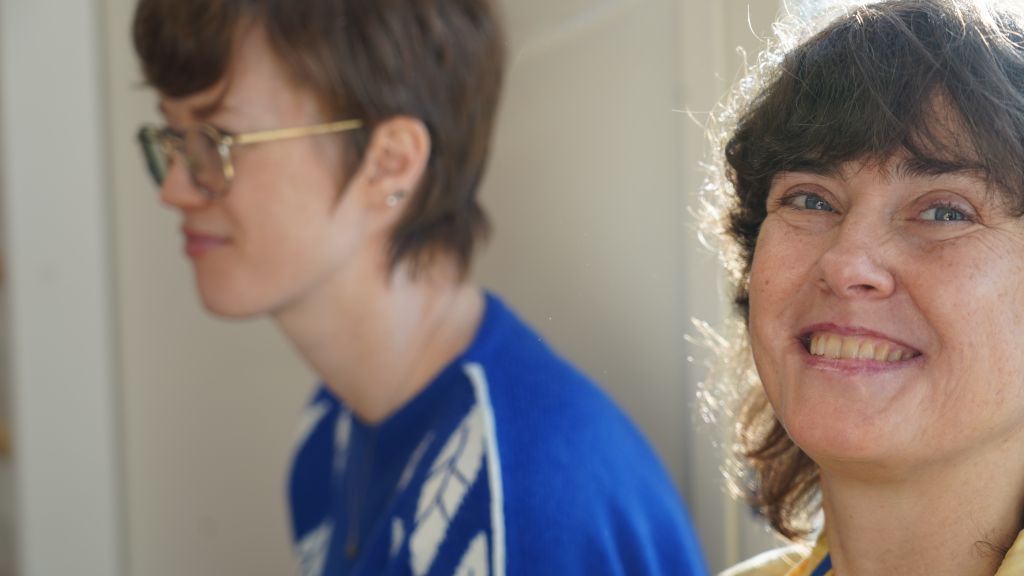
Kleimola reflects on how art crosses all kinds of borders and language barriers and offers us many ways in which to come together and understand each other. Her words ring very true.
*****
Text and photography: Johanna Nortesuo, Communications trainee, Taikusydän / Turku University of Applied Sciences
Interested in the Artist Shadowing Program and international arts and health collaboration? Join the Culture And Health Community and subscribe to the newsletter here.
*****